The Weapon of Beauty II – The Creativity of Beauty – In Praise Of The Black Woman
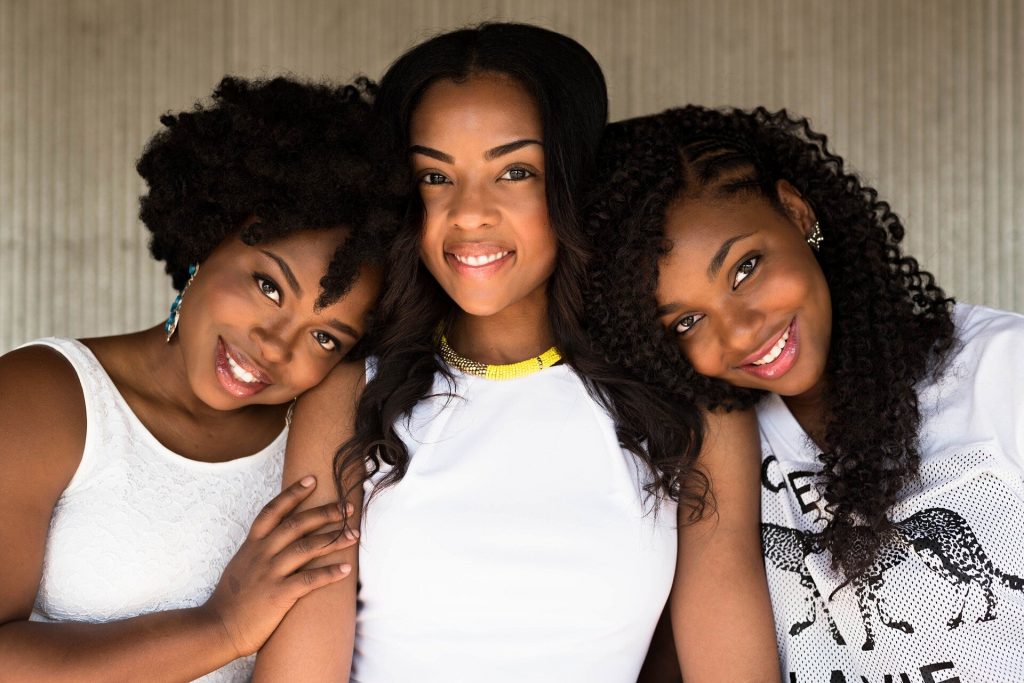
In honor of this issue of black creativity I want to explore how black women use their innate creativity to beautify themselves. Historically black women – whether disenfranchised or queens of kingdoms have found creative and prolific ways of expressing and enhancing their beauty.
The melanated wo(mb)man comes in many different complexions and skin type variations. From light bright damn there white to dark as the night’s sky. This has no bearing on the creativity displayed in their glamour. Their complexion gives way for exaggeration using colors and textures.
Since 1642 black women have been taught that we are not the ideal beauty and that nothing about us fits in with the world’s standard. Yet, we prevail. Creating beauty in a world that’s constantly telling us we are not beauty or beautiful.
Somehow, our strong cheekbones, full lips, dramatic noses combined are a problem, however strategically placed on “others” (white women or light skinned Hispanic women) it’s deemed beautiful. There is not a color a black woman have encountered that she did not own. We look good in bright colors, pastel colors, deep earth tones and the list continues. There is proof in every other day there is a post on social media with the caption “black women created – insert color-“ the color changes from yellow, to pastel pink to ruby red.
Creativity in beauty is a black women’s paradise. We created the use of makeup to define quirks of the face. Our hairstylist are living magicians. The sorcery that is created using a hot comb and some gel is innovation at its best. We have natural hair that defines the laws of gravity, yet we can manipulate our strands to fall and flow like everyone else’s. This is the very essence of our creativity in beauty.
Alice Walker said “Creation is really a sustained period of bliss — even though the subject can still be very sad. Because there’s the triumph of coming through and understanding that you have, and that you did it the way only you could do it — you didn’t do it the way somebody told you to do it, you did it just the way you had to do it. And that is what makes us us.”
For centuries Black people in America were criminalized for reading and writing. The freedom to paint, sculpt, or do any standard artistic activities was not available. Then how was the creativity of the Black woman kept alive? We braided each other’s hair in geometric ways that gave directions to states where they can live as free citizens and not slaves.
In the 18th century, Tignon laws were established in Louisiana in an effort to police black women’s hair. Black women of the time would adorn their textured hair with accent pieces such as gems, jewels, and beads making them drastically stand out from white women of the time, these laws became policy because our ancestors hair styles were too ornate and the white men were attracted and distracted.
The point for the laws was to ban black women from displaying their hair to eliminate the white man’s desire and signify class. In response, they wore turbans in the most elaborate and original ways that caused even more of a stir. They created a fashion statement showing our creativity yet again.
At the time, the tignon law did not include adornment of headdresses, so they were not breaking any laws. Today, it is still commonplace for Black women to wear elaborate head-wraps and headdresses.
Cleopatra used wigs and makeup to seduce men and gain her freedom eventually becoming queen of Egypt. Diana Ross used big hair to take her career to the next level.
Nefertiti was the queen of Egypt but also the unofficial queen of the eyeliner. Brandy’s braids, Eartha Kitt’s cheekbones, Kelly Rowland’s glossy complexion and Beyoncé’s everything! Whether we were slaves in the Americas or queens of Africa we have always held the ability to dazzle and disarm.
Originally Published in The Northend Agent newspaper